Utah County Auditor Race: Experience, Oversight, and the Scope of the Office
The Utah County Auditor’s Office is administrative, not legislative. It does not set policy or determine tax rates. Its responsibilities include certifying tax rates, extending levies, overseeing aspects of the budgeting process, reconciling financial records, and maintaining internal controls.
When systems function properly, the office receives little public attention. When errors occur, the focus shifts to process and oversight.
Earlier this year, Utah County acknowledged a certified tax rate error affecting Provo taxpayers and the Provo City School District. Separately, a joint resolution between Provo City School District and Alpine School District identified parcels located within Provo city limits that had been assigned to Alpine School District for taxation purposes and sought to correct that boundary alignment.
Those matters are distinct, but both involve tax administration and internal controls.
Three candidates are seeking the position: Tad Rasmussen, Gina Tanner, and Travis Hoban. Each presents a different interpretation of what the office should prioritize and how broadly the auditor’s role should extend.

Tad Rasmussen: Procurement Reform and Internal Process Changes – https://tad4auditor.com/
Tad Rasmussen has worked in county government for more than two decades. He argues that long-term institutional experience has given him insight into areas where internal processes can be improved.
Rasmussen focuses heavily on procurement. He stated that in early 2024, procurement thresholds for requiring bids were raised. He expressed concern that the current structure does not allow vendor selection on an open, transparent platform. He believes the County should consistently rely on a centralized electronic bidding platform with minimum posting requirements to ensure vendors have a fair opportunity to compete to save the County money.
A new procurement system involving an outside party is expected to go live this fall. Rasmussen believes policy adjustments, combined with completion of the county’s ERP (enterprise resource planning) system, can increase transparency and reduce the risk of workarounds.
On financial systems, Rasmussen agrees that reliance on spreadsheets can introduce risk. He supports moving processes fully into the ERP system and using automation, including limited AI tools, where appropriate. He emphasized that AI outputs must be verified and that internal quality controls remain essential.
Rasmussen also raised questions about organizational layering within certain areas of county government, suggesting some departments may be “top heavy.” That assessment would require examination of staffing data to confirm.
He stated that the auditor’s office does not currently require a conflict-of-interest disclosure specific to the office and said he would implement one under his authority if elected.
Books Rasmussen said he has recently read or is currently reading:
- Persuasion, the art of getting what you want — David Lakhani
- QBQ! The Question Behind the Question — John G Miller

Gina Tanner: Budget Discipline and Institutional Continuity – https://auditorgina.com/
Gina Tanner currently serves as Budget Manager in the Auditor’s Office and entered the race after Auditor Rod Mann announced he would not seek reelection.
Tanner holds a Master’s in Accounting and has worked at both department and county levels. Her campaign centers on budgeting discipline and process refinement from within the existing structure.
Tanner highlights her role in transitioning the county toward a target-based budgeting model. Under this approach, commissioners determine service levels, departments receive baseline funding, and additional allocations must be tied to clearly defined services or programs. Departments are expected to identify efficiencies within their own budgets rather than relying on automatic increases.
She noted that budgets do not automatically rise with inflation and emphasized coordination efforts—such as combining departmental mailings—as examples of cost control.
On tax administration, Tanner supports automating tax rate inputs while maintaining human oversight. She acknowledged that past errors have occurred and emphasized strengthening review processes and documentation to prevent recurrence. She stated that many procedures currently exist informally and should be formally documented before further automation expands.
Regarding AI, Tanner described it as a tool to assist with documentation, workflow improvements, and anomaly detection, but stressed that human judgment remains essential.
She characterized the auditor’s office as a resource for both departments and the public, emphasizing clear presentation of financial data and careful analysis before drawing conclusions.
Books Tanner said she has recently read or is currently reading:
- The Speed of Trust — Stephen M. R. Covey
- The Seven Ups of Happiness — Scott Christopher
- The Making of America — Cleon Skousen
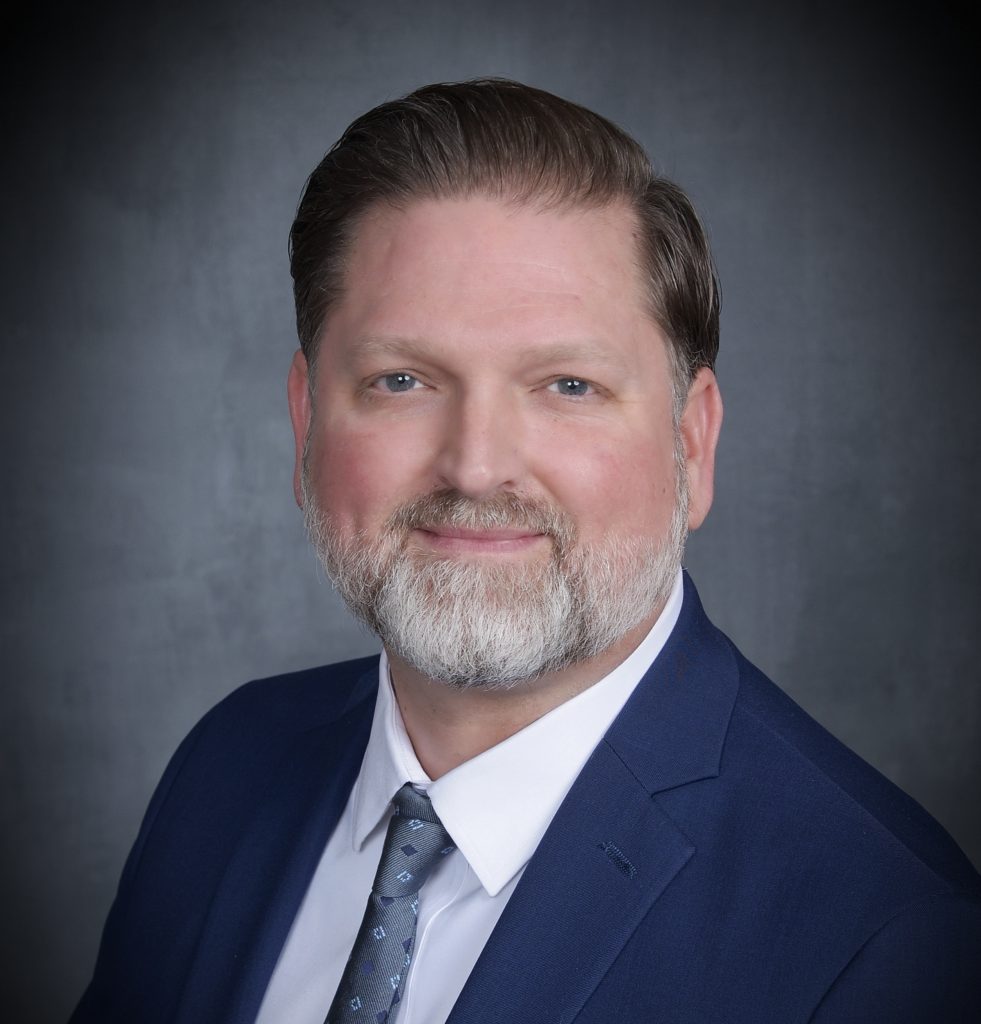
Travis Hoban: Expanded Audit Scope and External Perspective – https://travis4utah.org/
Travis Hoban serves on the Provo City Council and works in the private sector, including experience as a fintech executive. He is a Certified Internal Auditor.
Hoban stated that the county budget has grown significantly in recent years relative to population and inflation growth. He argues that residents are feeling pressure from property taxes and that the auditor’s office should take a more assertive role in evaluating efficiency and internal controls.
While acknowledging that the auditor does not set tax rates or policy, Hoban views the position as one that should proactively identify systemic weaknesses.
In discussing the recent boundary adjustment between Provo City School District and Alpine School District, Hoban stated that certain parcels were mis-labeled and that the Auditor collected taxes without sufficient due diligence. He contends that the auditor should conduct periodic reconciliation between school district boundary maps and tax area assignments rather than relying solely on Assessor-provided coding.
Utah law requires the auditor to reconcile financial books and accounts and permits performance audits as deemed necessary. The statute does not expressly mandate GIS-level boundary reconciliation. Hoban’s position reflects a broader interpretation of the internal audit function than what is explicitly required. He believes it falls under the duties of financial audits as taxes are being collected.
Hoban also connected the boundary issue to the earlier certified tax rate error, describing both as systemic control failures. Public reporting confirms the certified tax rate error occurred; documentation has not established that the boundary alignment issue stemmed from the same operational cause.
He supports accelerating ERP implementation and reducing reliance on spreadsheet-based processes. On AI, he emphasized strong guardrails and evidence-based auditing practices.
Book Hoban said he has recently read or is currently reading:
- How to Retire — Christine Benz
Utah County voters will determine which interpretation of the auditor’s role best safeguards public funds: internal reform and procurement focus, budgeting continuity and documentation, or expanded audit oversight and independent reconciliation practices.