The race for Utah County Commission Seat A is wide open following the announcement that incumbent Amelia Powers Gardner will not seek reelection. With the county facing unprecedented growth, the commission—which acts as both the legislative and executive arm of the county—will be tasked with managing infrastructure, housing affordability, and the ongoing modernization of county services.
The field of candidates ranges from seasoned municipal leaders to private-sector challengers, each offering a distinct vision for how the county should be managed. Here is an expanded look at where the frontrunners stand on the budget, growth, and navigating the modern information landscape.
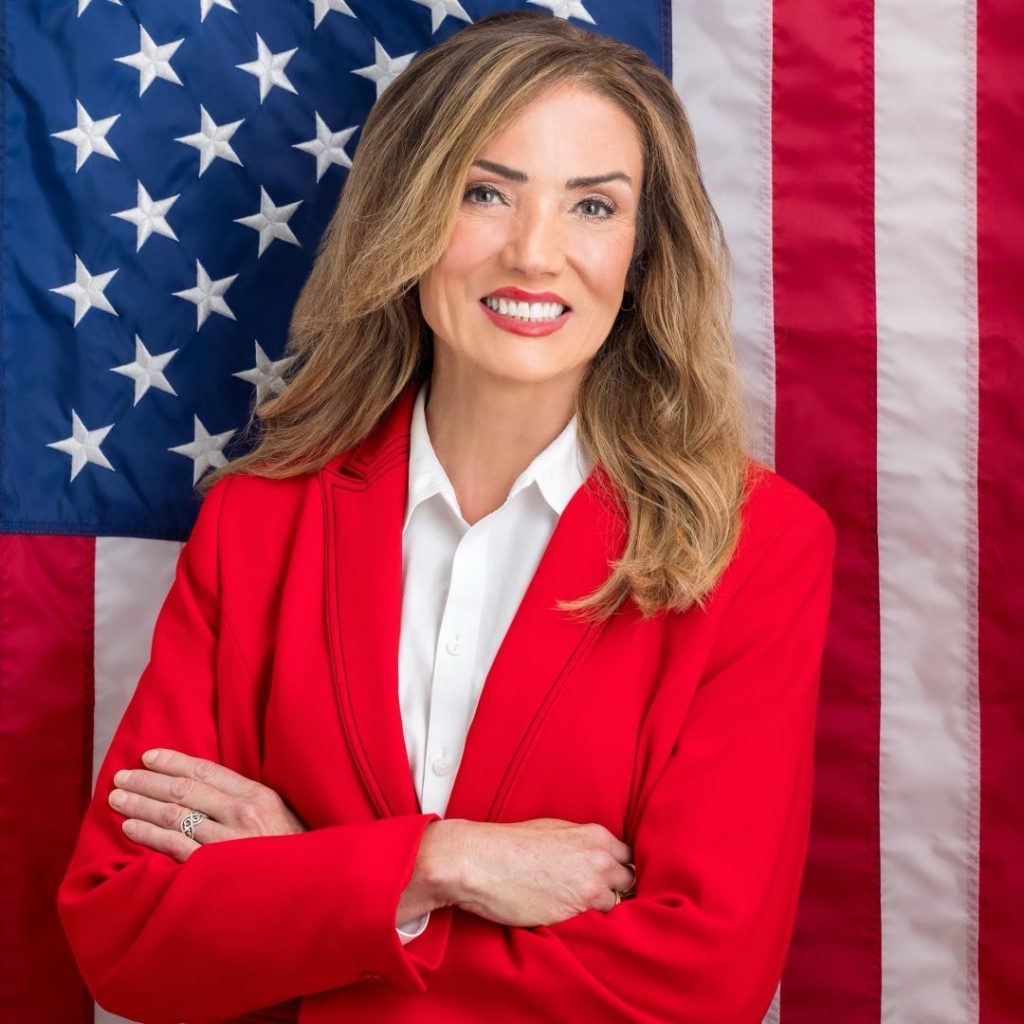
Michelle Kaufusi: Executive Experience and Growth Management – https://teamkaufusi.com/
Background: Former Mayor of Provo, Former Provo School Board
Michelle Kaufusi brings 15 years of public service to her campaign. After serving two terms as the Mayor of Provo, she narrowly lost a highly publicized reelection bid and was subsequently asked to run for the county commission to bring her municipal executive background to the regional level. Born and raised in Provo as one of seven children to a single working mother, Kaufusi attributes her strong work ethic to her early years, noting her mother’s reliance on hard work over government assistance. Her ultimate goal is to foster a county robust enough that all seven of her grandchildren choose to stay in Utah County.
High-Level Service, Low Tax Burden
Kaufusi’s pitch to the county relies heavily on her executive track record. During her eight years as mayor, she points out that she balanced the budget every year without recommending a tax increase. Having served as president of the Mountainland Association of Governments (MAG), Kaufusi stresses proactive planning. Her philosophy on the county’s rapid expansion is blunt: “If you don’t get out ahead of it, it will roll you over.” She emphasizes the heavy burden of unfunded mandates from the state and federal government, pointing to the high costs of staffing health workers in the county jail.
Regarding ICE, Kaufusi said “Utah County is where I need to stay focused”. Noting she is married to an immigrant, and that she deliberately did not sign a contract for ICE to operate in Provo after consulting with Utah County Sheriff Mike Smith.
Technology and the Information Landscape
When it comes to the county’s budget, Kaufusi notes that every single dollar counts—pointing out that even a simple quarter-sheet mailer to the whole county costs $15,000. Because of this strict financial view, she is open to utilizing AI to drive efficiency. She considers herself a straight shooter willing to do hard things, acknowledging that fully implementing AI may require making tough staffing cuts if it serves the county’s best financial interests.
To combat political disinformation, Kaufusi takes a highly disciplined approach to her media consumption. She avoids television news, calling it “horrible,” and is not a fan of Facebook, noting her sister manages her social media logins. Instead, she prefers to spend her professional networking time on LinkedIn, focusing on relationship-building over digital noise.
Books Kaufusi said she has recently read or is currently reading:
- 1776 by David McCullough
- Let Them by Mel Robbins
- The Nightingale by Kristin Hannah
- Listen for the Lie by Amy Tintera
- Morning on Horseback by David McCullough
- The Correspondent by Virginia Evans
Brent Bowles: Fiscal Contraction and County Oversight
Background: Retired Firefighter, CRNA, Former HOA President
Brent Bowles enters the race with a diverse professional background spanning three careers: 23 years full-time with the Sandy Fire Department, a Master’s degree and an 18-year career as an independent Certified Registered Nurse Anesthetist (CRNA), and nine years as an HOA president where he brought his community out of debt without raising dues.
The Focus: Government Contraction
Bowles is deeply concerned with the current trajectory of county spending and compensation. He points specifically to recent salary increases for commissioners—rising from $111,000 to $168,000, and nearing $230,000 with benefits—as evidence of a system lacking oversight.
- Commission Restructuring: Bowles questions the necessity of the current three-commissioner, full-time system. He advocates for moving to a five-member, part-time commission, which he estimates would cut costs by $250,000. He also questions the necessity of the recently hired county administrator.
- Shrinking Jurisdiction, Growing Staff: He points out a structural paradox in the county’s budget: the county has hired over 20 new employees recently, even as the actual footprint of unincorporated Utah County shrinks due to city annexations.
- Challenging the State: Bowles is a strong critic of public sector compensation, citing that state and federal employees make 26% more than the private sector. He wants the county to challenge the state retirement system, allowing employees to control their own retirement funds.
Automation and Information
When evaluating new technologies like Artificial Intelligence, Bowles is highly skeptical, ultimately concluding that the risks will likely outweigh the benefits. He warns against relying so heavily on AI that society forgets its capacity to present misleading information, noting that the systems themselves admit they can deceive users or conceal inaccuracies.
He is also deeply concerned about AI’s impact on the job market and the technology sector. Pointing to the massive $15 billion Micron semiconductor facility being built in Boise, Idaho, Bowles notes that despite regional projections of 3,000 to 5,000 new jobs, the heavy reliance on robotics means actual job creation could be under 1,000, with human positions relegated mostly to maintaining robotic equipment.
For every policy decision, Bowles relies on a strict five-point matrix: Is it morally right? Ethically right? Fiscally sound? Good for all? Constitutionally sound?
Books Bowles said he has recently read or is currently reading:
Rather than traditional books, Bowles focuses his reading on medical journals to stay current in his profession. He also spends significant time analyzing legislative bills, carefully parsing through convoluted legal language to determine the true impact of the policies lawmakers are debating.
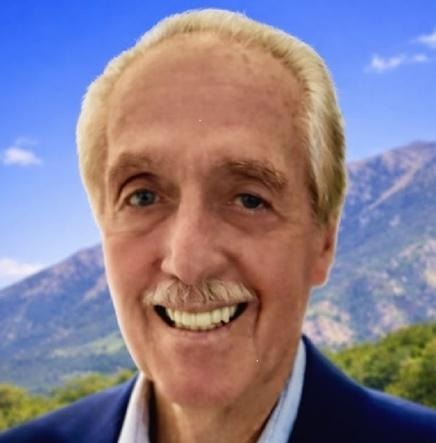
Larry W. Evans: The Ground-Level Perspective
Background: Deputy Sheriff, UVU Adjunct Professor
Larry W. Evans brings a lengthy career in law enforcement to his campaign. At 73, he has spent 15 years working for the county, currently serving as a deputy for the Utah County Sheriff’s Office and as an adjunct professor of Criminal Justice at Utah Valley University. Having lived in Utah County since he was eight years old, he holds a bachelor’s degree from BYU and a master’s from Weber State University.
Right-Sizing and Restructuring
Evans is running to address what he sees as “fat and waste” at the upper levels of county government. While he praises the efficiency of the “ground-level” workers, he argues that the top of the organizational chart needs a thorough audit. Like Bowles, Evans is a strong proponent of overhauling the commission itself. He wants to abandon the current three-member, at-large system in favor of a five-member commission (three regional seats and two at-large seats) to better represent the diverse needs across the county. Positioning himself as the anti-career politician, he is pledging to serve only one term (“one and done”). He has been highly critical of current commissioners, citing instances of them being on their phones and not paying attention during public meetings.
On immigration, Evans takes a nuanced approach. While he believes national immigration policy needs to change and notes that “marching orders come from Washington,” he refuses to blame the hardworking immigrants who have taken advantage of the system, noting he grew up working alongside them. He insists the county must enforce the laws legally while setting a positive example.
Modernization and Decorum
Regarding the modernization of the county, Evans is cautious about artificial intelligence. He sees massive potential for streamlining administrative processes but warns of the potential for abuse. He emphasizes that personal contact remains vital in local government and explicitly states that he does not want technology to replace human workers.
On the subject of disinformation, Evans believes that the best defense is personal accessibility. He argues that politicians cannot totally protect themselves from bad information online, but by remaining physically available to constituents, they can cut through the noise. He stresses that the country is in desperate need of a return to civility and decorum.
Books Evans said he has recently read or is currently reading:
- The Greatest Generation by Tom Brokaw
- It’s Not About the Bike by Lance Armstrong
- Talking to Strangers by Malcolm Gladwell
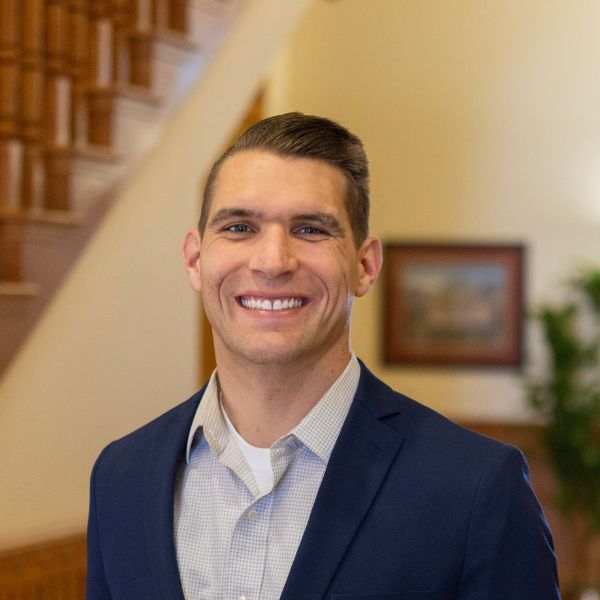
Taylor Fox: The Forward-Looking Planner
Background: BYU Marketing Director, Social Entrepreneur
Taylor Fox represents a younger demographic in the race. A father of three who has lived in Utah County for the last decade, Fox graduated from UVU in 2019 with a degree in Digital Marketing and a minor in Entrepreneurship. His private-sector background spans sales and HR for Amazon, and he currently works as a Marketing Coordinator and Director at BYU. He views this election as a pivotal moment to solve the core of the county’s problems rather than relying on unsustainable NGO or government band-aids.
Growth, Families, and Enforcement
Fox believes the county must get ahead of the 10-year growth curve, pointing specifically to the explosive, high-density growth happening in the west and south. He wants to work proactively with cities like Santaquin and Payson to prepare their infrastructure. Fox is pushing for greater transparency regarding rising taxes. He wants a strict review of where funds are going, particularly concerning the rapidly growing costs of public safety, jail overtime, health department funding stability, and inter-agency allocations.
Fox takes a hardline stance on border enforcement. He is highly critical of “open borders” and defends ICE agents, arguing they are unfairly “attacked and demonized.” He pledges to work collaboratively with them to find and deport those breaking the law, warning that Utah County “won’t stay safe forever” unless it aggressively networks with cities to prevent crime.
Data Privacy and Multiple Sources
When it comes to AI, Fox is deeply skeptical of current government rollouts. He notes that tools like Microsoft Copilot have been deployed but are underutilized, and he raises major data privacy concerns about turning county data over to these systems without proper safeguards. He questions whether the county is truly ready to rely on AI recommendations.
To combat disinformation, Fox leans on his marketing and entrepreneurial background. His advice to voters is to never rely on a single headline. He urges residents to use multiple sources, avoid rushing to judgment, and most importantly, get out and talk to “living people” to find the truth of a matter.
Books Fox said he has recently read or is currently reading:
- How Will You Measure Your Life? by Clayton M. Christensen
- Extreme Ownership by Jocko Willink and Leif Babin
- Rich Dad Poor Dad by Robert T. Kiyosaki
- The 7 Habits of Highly Effective People by Stephen R. Covey