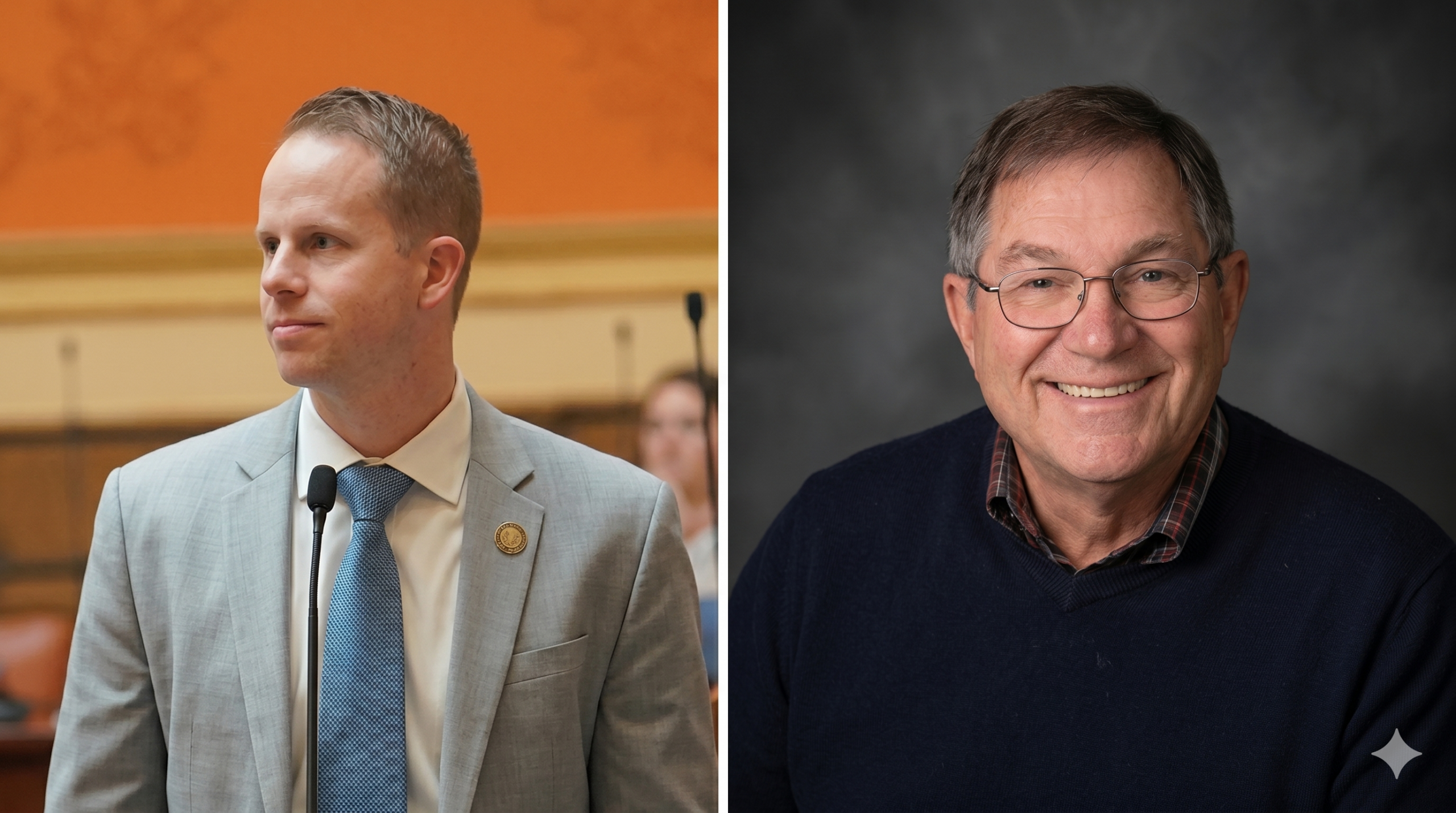
The Republican primary for House District 16 in Layton presents voters with a clear choice between two distinct approaches to state governance. The race contrasts an incumbent focused on constitutional and social legislation with a challenger emphasizing municipal-level executive experience and property tax reform.
Following the Davis County Republican Convention, where Stevenson got 55% to Lee’s 45%, both candidates will appear on the June 23rd primary ballot. Here is a breakdown of the candidates, their platforms, and the context surrounding their campaigns.
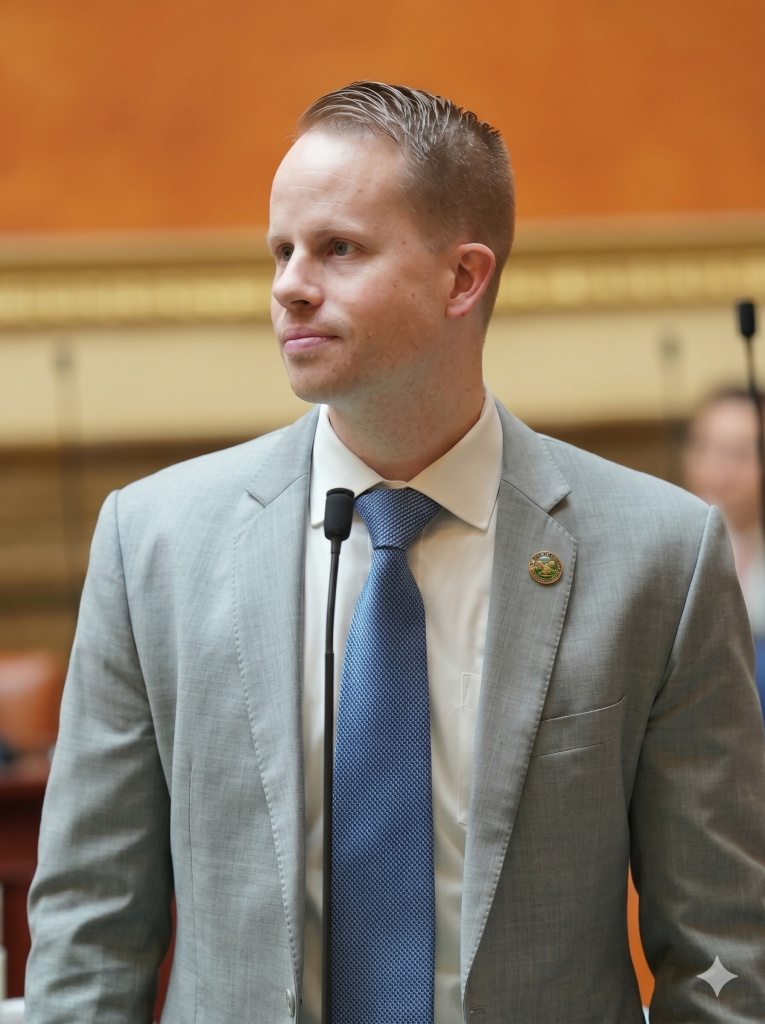
Trevor Lee – Legislative Action and Fiscal Conservatism
Trevor Lee is seeking a third term in the Utah House. He argues that his legislative record demonstrates a willingness to tackle difficult, high-profile issues and represent constituent concerns directly, regardless of pushback from party leadership or the public.
Fiscal Policy and Voting Record Lee’s frustration with state spending is reflected in his voting record. He recently voted against the “Bill of Bills”—the omnibus legislation that finalizes the state budget at the end of the legislative session. He argued the consolidated nature of these massive bills forces legislators to rubber-stamp spending they disagree with. Lee wants more transparency and debate during the appropriation process. He attributes Utah’s rising cost of living to this type of unchecked spending, as well as the widespread use of Public Infrastructure Districts (PIDs).
Social Policy and Immigration During his tenure, Lee has passed over 20 bills. His legislative portfolio includes the “Flag Bill,” which sought to enforce political neutrality on government property by restricting the display of specific flags. He also co-sponsored a bill that made Utah the first state to remove fluoride from specific public water supplies.
Lee frequently highlights illegal immigration as a primary driver of state costs, stating that 100,000 illegal immigrants have entered under the current federal administration. For context, demographic data from the American Immigration Council indicates that approximately 100,000 to 113,000 is the estimated total undocumented population currently residing in Utah, rather than the number of new arrivals over the past four years. Lee believes the vast majority of new immigration to Utah is from illegal immigration.
AI and Data Centers Lee says “I understand technology”. He advocates for a cautious approach to large-scale land deals, such as 40,000-acre tech infrastructure projects, arguing the state must protect stakeholders before signing over land.
Prop 4 Lee believes that trust with the legislature is low, and that the last minute move to make prepaid postage envelopes invalid for removing your name from a petition isn’t good process, it is reality. Lee says he has seen these ballot initiatives destroy California and it is already hurting Oregon. He believes it is the job of the legislature to draw the boundaries and Judge Gibson should be impeached for choosing the plaintiff’s map instead of letting the map revert to the previous version, as they were advised would happen by legislative counsel.
Addressing the Controversies Lee’s campaign has had to navigate three distinct controversies leading up to the primary. Lee maintains these are coordinated “hit pieces.” Voters should be aware of the separate nature of these incidents:
- 2013 Check Fraud: Lee acknowledged a 2013 incident from a previous employer in North Carolina where he altered checks. He states he signed an admission of guilt, paid full restitution, and characterizes it as a stupid mistake from a decade ago.
- Home Construction Dispute: Lee is currently involved in a civil dispute regarding a bankrupt general contractor on his personal residence, which has left subcontractors unpaid. He had the state attorney general review the case, to make sure there is no special treatment for him.The case was dismissed, with prejudice.
- Enevive Allegations: Lee has firmly denied recent allegations of legislative influence involving a $93,000 payment from the CEO of a water research firm, calling the claims “malicious and false.” The lawsuit was voluntarily dismissed by all parties in April 2026.
Books Lee is reading:
- Bowling Alone — Robert Putnam
- Cry Wolf — Paul Lake
- The Disease of the Public Mind — Thomas Fleming

Bob Stevenson – Executive Experience and Housing Reform
Bob Stevenson is challenging Lee by pointing to his decades of local government and executive leadership. He has served three terms on the Layton City Council, was Mayor of Layton in 2014, and spent eight years as a Davis County Commissioner. His campaign centers on applying this municipal-level experience to state budgeting and growth management.
Convention Momentum Stevenson enters the primary with momentum from the Davis County Republican Convention, where he secured a 55% to 45% lead over Lee among delegates. Stevenson has stated he is running a campaign focused strictly on policy ideas rather than personal attacks, noting he engages in very little social media campaigning and has dismissed circulating rumors regarding his own background.
Housing and Land Costs Stevenson’s platform is built on the practical realities of the Davis County housing market. He notes that land acreage in West Layton currently costs between $350,000 and $400,000, effectively pricing out small, independent builders for something like a 10 acre development. That clock starts ticking when the loan to buy the land is taken out.
In order to raise the density of a development, a developer can currently add things like open space and other features, but that means a bigger scale, pushing out smaller developers.
To combat this, Stevenson supports the expanded use of Planned Residential Unit Development (PRUD) overlays. This strategy bypasses “big box” builder monopolies by allowing independent builders to develop smaller lots and increase density while still requiring dedicated green space. Some can be 20%. Stevenson supports reducing this which he says both reduces cost of homes and HOA fees and makes things more affordable for smaller builders to tackle these projects. He said that by reducing greenspace, you reduce water usage as well.
Tax Reform and Budgeting Stevenson highlights his experience managing tight municipal budgets during economic downturns in the 1980s and 2000s. He stated that observing entities go through “Truth in Taxation” processes underscores the urgent need for property tax reform. To provide immediate economic relief, Stevenson is a vocal proponent of eliminating the state income tax on Social Security.
Managing the AI and Tech “Storm” Drawing on his private sector experience working with large entities like Nestle, Stevenson views the influx of AI and data centers as a massive shift, likening it to the early days of the internet. He notes that while technology inevitably displaces certain jobs, it creates new opportunities. Stevenson views the legislature’s role as preparing the state for long-term, 100 years in the future
Books Stevenson is reading:
- The Old Testament (Study Guides) — David Ridges
- History Matters — David Mccullough.