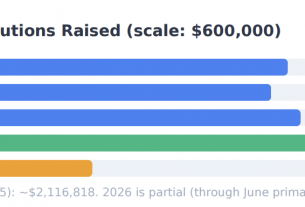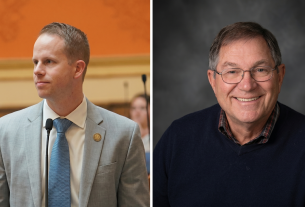
Pre-primary campaign finance reports reveal a connected infrastructure of consultants and donors backing establishment candidates across five races — from county commission to a state school board seat
Disclosure: The financial analyses underlying this article were produced using Claude AI (Anthropic), which read the original disclosure PDFs directly and extracted contribution and expenditure data without editorial input. Raw disclosure documents were fed to the model to reduce the potential for human interpretive bias in the data extraction phase. This was fed to Claude, which wrote the article with edits and supervision by me to avoid bias. I do have signs for Kafusi, Smith, and Astill in my yard.
The generated PDFS can be found here
With the June 23 Republican primary days away, campaign finance disclosures tell a consistent story across five contested races in Utah County and the surrounding multi-county district: the same political consulting firms, the same PACs, and many of the same individual donors appear again and again behind the best-funded candidates. Challengers and outsiders, meanwhile, are scrambling for cash — or running out of it entirely.
The five races covered here span the Utah County Commission (both Seat A and Seat B), the Utah County Clerk, Utah Senate District 21, and State School Board District 11. Together they represent a test of whether a coordinated, professionally run establishment operation can hold across the ballot.
The Infrastructure
Four firms dominate the vendor lists of the best-funded candidates in nearly every race:
BCR Political (campaign strategy and consulting), BIVIO Resources (digital voter contact and data), Gathering Inc (field operations and GOTV), and Peerly (digital outreach) appear together in the filings of Corey Astill (County Clerk), Brady Brammer (Senate D21), Michelle Kaufusi (Commission Seat A), Isaac Paxman (Commission Seat B), and Terry Hutchinson (State School Board D11). In each race the pattern is the same: a well-funded candidate running a consultant-driven campaign against an opponent with a fraction of the resources — or a completely different vendor set.
The donor overlap reinforces the picture. Steven and Kalleen Lund gave $5,000 each to Brammer, Kaufusi, and Paxman. The Herbert family — former Governor Gary Herbert and his wife Jeanette — contributed $500 to both Kaufusi and Paxman. RR PAC gave to both. Spencer Stokes provided in-kind services to Astill, Kaufusi, and Paxman. Doug Ford gave $5,000 in-kind to both Kaufusi and Paxman. And the Doers Network — a Wilmington, Delaware-based organization — gave $5,000 to Herrin (Seat B), $1,500 to Kaufusi (Seat A), and $1,500 to Hutchinson (School Board D11), appearing in three different races across three different office levels.
Utah County Clerk: Astill $112,885 vs. Davidson $17,360
The most financially lopsided race on the ballot features challenger Corey Astill outraising incumbent clerk Aaron Davidson by more than 6-to-1.
Astill raised $112,885 in cash plus $44,822 in in-kind contributions — total resources of over $157,000. His largest backer is Defending Utah Values PAC, which provided $10,000 in cash and $23,785 in-kind, a combined $33,785. Astill also loaned his own campaign $25,000 and deployed BCR Political, BIVIO Resources, Gathering Inc, and Peerly in a configuration nearly identical to the other establishment-backed races.
Davidson, the first-term incumbent, raised just $17,360 — more than half from his own pocket ($8,889 in self-loans). His largest outside donor gave $1,000. He has no PAC support and entered primary week with $346 in cash. He is effectively running on fumes against one of the best-capitalized challengers in any county race.
Utah Senate District 21: Brammer $146,751 vs. Smith $51,131
Incumbent Brady Brammer enters primary week with a commanding financial advantage over challenger Kelly Smith.
Brammer raised $146,751 — 100% from outside donors, zero self-funding — and retains $90,686 in cash on hand, the largest reserve of any candidate across these five races. His biggest backer is the Utah Republican Senate Campaign Committee at $55,000. Total party and PAC money to Brammer exceeded $103,000.
Smith raised $51,131, but 41% came from her own loans ($20,726). Her largest outside donor is Fresh Air PAC at $16,500. She has $18,307 remaining — less than a fifth of Brammer’s reserve — and qualified for the ballot through signatures rather than the convention, a path that typically signals a grassroots rather than establishment campaign.
There is a rumor going around that Smith was late with one of her disclosures. It was actually a PAC that gave a in-kind donation that was late. https://www.sltrib.com/news/politics/2026/06/17/checks-balances-pac-fine-not/
Commission Seat A: Kaufusi $94,009 vs. Bowles $1,568 (outside money)
The starkest race in Utah County is Commission Seat A, where the raw top-line numbers obscure the real picture.
Both candidates raised roughly $90,000–$94,000 in cash. But of Brent Bowles’ $51,668, $50,101 came from his own loans across three transfers. His five outside donors gave a combined $1,568. Michelle Kaufusi, by contrast, raised all $94,009 from outside donors. Her top contributors — Jason McGowan ($30,000), Layton Construction ($25,000), and Nancy Roney ($10,000) — account for nearly 70% of her total, with the construction industry prominently represented ($29,500 from Layton, Clyde Companies, and Fugal Commercial Services combined).
Kaufusi spent $90,891 (96.7% of what she raised), leaving only $3,118 on hand. Her biggest single expenditure: Gathering Inc at $58,333, or 64% of all spending, managing field and GOTV operations.
Bowles, spending from his own self-loans, used direct mail (GQP, $11,695), digital outreach (Proximity Political, $8,650), and consulting (Frank Anderson and Bill Lee, $12,650 combined). He retains $8,607 — more cash on hand than Kaufusi entering the final push.
Commission Seat B: Paxman $168,872 vs. Herrin $52,800 vs. Spencer $52,230
The three-way Seat B race features the largest fundraising haul in Utah County: Isaac Paxman at $168,872, more than three times either opponent.
Paxman’s donor list starts with $60,000 from his own family: $30,000 from Isaac and Elizabeth Paxman across three payments, $20,000 from Susan Paxman Hatch, and $10,000 from David and Kathryn Paxman. His largest non-family donors include Nancy Thomas ($20,000), Annette Bowen ($20,000), Madison Galland ($10,000), and Wayne and Patrice Tew ($10,000). He received in-kind contributions from the same Spencer Stokes and Doug Ford who backed Kaufusi in Seat A.
Paxman’s spending is aggressive: $151,412 spent (89.7% of what he raised). BIVIO Resources alone received $41,818 — roughly 15 times BIVIO’s billing in the other races. Gathering Inc received $70,333 and BCR Political $27,547. He enters the final week with $17,461 in cash.
Carolina Herrin (Spanish Fork) raised $52,800 but spent only $13,170 — just 25% — leaving her with $39,630 in cash on hand, the most of any Seat B candidate. Her campaign is anchored by a single $25,000 donation from Jeff Burton of Salem (47% of her total). The Doers Network ($5,000) and Utah Doers ($3,750) round out her organizational support. Her donor list is notably diverse, including contributions from the Brazil Utah Chamber of Commerce and a series of donors with Brazilian and Latino surnames — an unusual coalition for Utah County.
David Spencer (Orem) raised $52,230, including a $15,000 self-loan, but his campaign is the most financially independent of the three: no BCR Political, no BIVIO Resources, no Gathering Inc. His biggest outside donor is AJK Holdings ($13,000). He’s spending locally — Veracity Enterprises ($15,900 for consulting and a mailer), Signs.com ($4,943), McNeil Printing ($1,550). He retains $25,135 on hand. In an unusual arrangement, his consultant Frank Anderson donated $2,000 to Spencer on June 5, then billed Spencer $2,200 for texting and email services three days later.
State School Board District 11: Nuttall $27,934 vs. Hutchinson $25,400
The school board race in the Alpine area adds a fifth data point to the BCR/BIVIO pattern — and delivers the race’s most unusual financial fact: one candidate is overdrawn.
Terry Hutchinson raised $25,400, but spent $26,333 — entering primary week with a negative balance of $933.16. He is the only candidate across all five races analyzed to have spent more than he raised. The reason is visible in his vendor list: BIVIO Resources received $11,821 (45% of all spending), BCR Political received $3,510, Peerly $2,222, and Deseret News $2,880. The same four-firm infrastructure running the county commission and state senate races also ran this Alpine school board campaign.
Hutchinson’s donor base is concentrated. The Gifford family — Grant ($5,000), Dave ($500), Holly ($50) — contributed $5,550 combined. Nate Hutchinson (likely family, same Alpine address) gave $4,750. Hutchinson loaned himself $5,500 early in the cycle. The Wilmington, Delaware-based Doers Network, which also backed Herrin and Kaufusi, gave $1,500.
Tracy Nuttall raised $27,934 in cash and received an additional $6,245 in in-kind consulting and printing services from Governing Group PAC — making her total resource picture closer to $34,000. Her cash support is half PAC-driven: Education First PAC gave $7,500 across two contributions; All In For Utah gave $3,750; Governing Group PAC gave $2,750 in cash. Her individual donor base, by contrast, is unusually broad: more than 40 donors spread across Utah and several other states (Oregon, Nevada, Colorado, Iowa, Illinois, North Carolina), many giving $25–$250.
Nuttall spent $24,713 and retains $3,220 on hand. Her vendor set — Peczuh Printing ($11,640), Bill.com ($5,500), Vottiv ($1,726), Notatek ($1,345) — has no overlap with the BCR/BIVIO firms. Former Utah state legislator Lowry Snow and longtime political figure Nolan Karras both donated to Nuttall, suggesting a different wing of the Republican establishment is backing her: legislative and education-policy-oriented, not the consulting machine.
What the Money Says
Heading into primary day, the financial picture across all five races:
Brammer holds the largest reserve ($90,686) of any candidate in the field and faces an opponent with less than a fifth of that. Herrin has conserved more cash than either opponent in the Seat B race ($39,630) and could still make noise in the final days. Spencer sits in the middle with $25,135. Nuttall enters the final week financially solvent ($3,220) with substantial in-kind services already deployed; Hutchinson enters overdrawn.
The most consistent pattern across all five races is the connection between BCR Political, BIVIO Resources, Gathering Inc, and Peerly — and the candidates they back. That operation raised and spent more in virtually every race. Whether the money advantage translates to votes on June 23 is the question Utah County’s Republican primary voters will now answer.
Campaign finance data sourced from Seven Days Preceding the Primary Election reports filed with the Utah County Clerk and the Utah Lt. Governor’s Office. Reporting periods end 6/10–6/11/2026, with filings due 6/15–6/16/2026. In-kind contributions are excluded from cash totals throughout. AI-assisted analysis performed using Claude (Anthropic); source PDFs provided directly to the model.