Senate District 21 voters will see three names on the November 3 ballot in Utah County, and only one of them has held the seat. Republican Sen. Brady Brammer won his June primary with 57% of the vote over Cedar Hills City Council member Kelly Smith, and now faces two challengers with very different political histories. Kandee Myers is a lifelong Democrat who calls herself a moderate, and Wayne Woodfield is a former Republican precinct chair running with the Forward Party. Both sat down to discuss their platforms. Brammer’s own positions are covered in a separate profile.
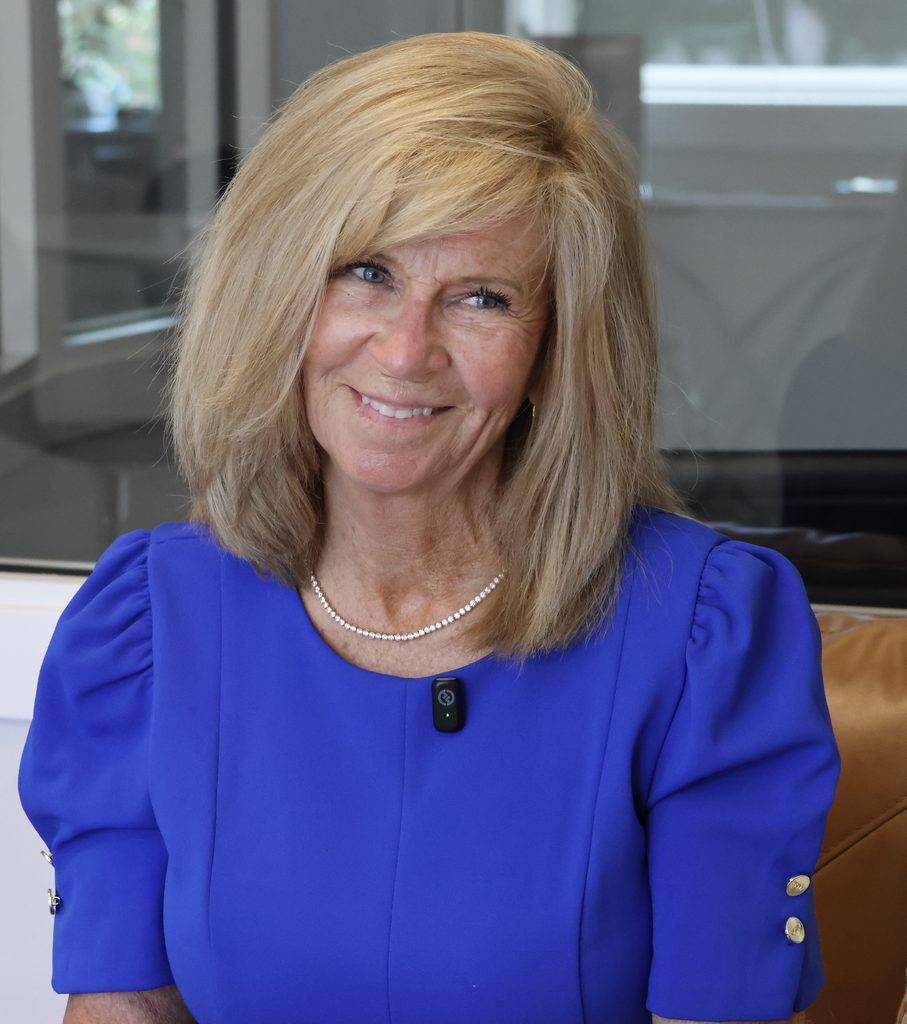
Kandee Myers: The Moderate Democrat Who Wants More Decorum
Background: Broker Associate; graduate degree in positive psychology from the University of Pennsylvania Website: kandee4utah.com Contact: kandee4utah@gmail.com
Myers recently turned 65. She was born in California but moved to Chicago at age 3, and she spent a good portion of her life in Tucson before settling in Utah 10 years ago. Her ties to the state run deeper than that, though. Myers mother, who was valedictorian of her class, was born and raised in Mt. Pleasant. Her family helped settle the Fairview area, still has relatives living there, and worked at Wasatch Academy. Her mother left the LDS Church after meeting her father, while Myers joined the church while in college. She grew up in a family of principled Democrats and has been one all her life. She has been married twice, spent 32 years with her first husband, and says they remain very good friends. Beyond real estate, she has owned other businesses, including a bookstore.
Civility and Common Ground
Myers describes herself as a moderate Democrat who likes the Republican Party and votes for some Republicans. Her approach is to find where people agree, and she says there is too much name calling in politics. She does not believe supermajority states work well, even when the supermajority belongs to Democrats, and she would rather focus on policy than personalities.
She is also concerned about gossip. Myers says she is old enough to remember that it is wrong to share stories nobody knows to be true, and she believes too many good people are loose with their tongues and criticize where they should not. She would like to see more decorum at every level of government and argues that Utah is not Washington, DC. She acknowledges she can be naive, but says believing the best in people tends to bring out the best in them. In her experience, Utahns also want to understand their neighbors better than people did in Arizona.
Housing and Incentives
Housing matters a great deal to Myers, who has owned about 20 rentals over the years. Her pattern was to move into a house, fix it up, rent it out, and eventually sell, and she sold most of them during her divorce. She has also worked with people who lost everything in the 2008 crisis. Her proposed solution starts with early education, and she says she is curious about how to help people with child care and mortgage payments at the same time. She says she still needs to learn more and is studying how different states approach these issues.
Myers argues that incentives cities and the state give to builders and developers do not always get passed along, and she points out that Brammer has a history of donations from the Utah Association of Realtors’ political action committee, RPAC. She raises the same question about business incentives more broadly, recalling that IBM took care of its employees in Tucson, with strong healthcare and retirement benefits, after the company received incentives there. Myers asks why other businesses get incentives without passing similar benefits on to their employees. She says she does understand why cities and the state offer incentives, but would advocate more for the people of Utah before giving any employer one, pointing to the state’s workforce as one of the best in the country.
School District Splits
Myers held an event to help people better understand the school district split. She questions Brammer’s role in it, noting that as chief sponsor of HB3003, the 2024 special-session bill that let Alpine School District split through municipal interlocal agreements, he left Pleasant Grove, which sits in Senate District 21, without a vote on the split, along with Vineyard, Orem, and Lindon.
Ballot Choice and Prop 4
Myers wants voters to have a real choice, and says people are unhappy when the ballot offers none. She supports Proposition 4 and argues gerrymandering should be considered corrupt.
AI and Schools
Myers likes the idea of a moratorium on AI and wants Utah to take the issue slowly. She would keep AI out of schools until students have learned critical thinking skills, and points to her twin grandchildren, who did not have cell phones until they were 18. She also says she loves the positives of AI.
Faith and Courage
Myers calls herself a person of deep faith, and says that faith guides how she treats herself and others. She does not want politics and church to be combined. She is inspired by people who show the courage to stand up when others might not agree, and she says she respects others deeply even when she disagrees with them.
Books Myers said she is reading or looking forward to reading:
- Situated by Angela Duckworth
- Camino Santiago
Myers is holding an event called Engage Forum: A Forum for Civic Renewal on October 12, 2026, at 7:00 p.m. at The Vista at Cedar Hills Golf Club, with BYU professor George Handley as the guest speaker.
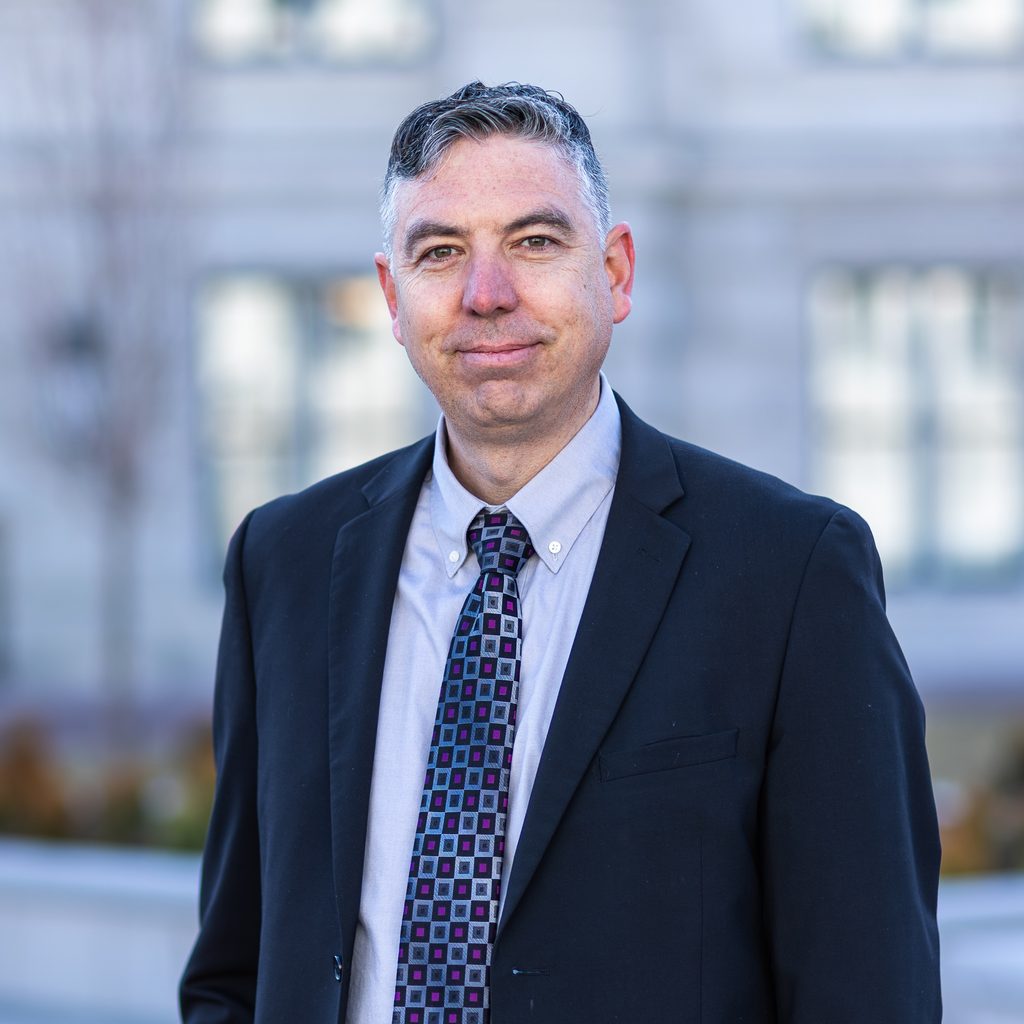
Wayne Woodfield: The Software Architect Turned Reform Candidate
Background: Software architect at RainFocus; computer science degree from BYU; former GOP precinct chair and former state vice chair of United Utah; six years on the Utah Foster Care board Website: wayneforsenate.com Contact: wayne@wayneforsenate.com
Woodfield grew up in Mapleton, earned his computer science degree at BYU, and served an LDS mission in Russia. He has lived in Provo, Springville, Spanish Fork, and Lehi, and says he has danced around Utah County his whole life. Woodfield and his wife have three children. He works for RainFocus, which builds event technology for very large events, and says he has enjoyed applying his professional abilities to the campaign, including building himself a mobile app for knocking on doors. His path into politics began when he bought a rental house while at BYU and got involved as Provo threatened rentals.
From Precinct Chair to Forward
Woodfield was involved in GOP politics for years, and says the party changed while he served as a precinct chair, becoming much more militant and less fair. He tried to bring things to a place of calm as chair, but says the MAGA movement made it worse. By his own account, he was an obedient Republican, loving the people he was supposed to love and vilifying the people he was supposed to vilify. After an incident, he became unaffiliated.
He then joined United Utah, which he describes as mostly disaffected Republicans, and became its state vice chair before it merged with Forward. Woodfield says he was energized to run against Brammer, and believes there are some things a legislator cannot do even once. He points to a law he says allowed removal requests, meaning requests to have a voter’s signature pulled from a ballot initiative petition, such as the Proposition 4 repeal, to be thrown away. That law is an amendment Brammer added to HB242 on the final night of the 2026 session, barring signature removal requests submitted with prepaid postage, which Brammer has defended as standard legal strategy. Brammer’s account of that bill, along with his other legislative priorities, is covered in the earlier profile of his campaign.
Government Reform and Transparency
If elected, Woodfield says he would come in strongest on government operations. He acknowledges that reform is hard to get immediate traction on, and names term limits and campaign finance as priorities. Woodfield also does not want the legislature writing ballot language for constitutional amendments and argues an independent body should oversee it. He believes many of these reforms probably have to be decided by ballot initiative because it is hard to ask legislators to limit their own power. He says it used to be different, when legislators did not fear the people and trusted them more, and ballot initiatives were easier.
Woodfield says he wants to make a difference where he sees government acting in bad faith. He believes legislators should act in a civically minded way, and wants to see power pushed back to the people. Woodfield also wants government to be transparent about what is happening. He believes the legislature should embrace Proposition 4.
Foster Care and DCFS
Woodfield served on the Utah Foster Care board for six years and says he would be involved in DCFS issues if elected.
AI and Learning
Woodfield went to a Salesforce conference. He took a Waymo and enjoyed it, saying that in many ways the cars are safer, though a second ride took a very circuitous and suboptimal route. He has also talked with educators, which he says gave him a lot of food for thought about AI in schools.
His main worry is that kids are using AI to avoid struggling to learn, and he says the struggle is important for retaining what is learned. For him the question is whether a person is offloading work or being assisted in it. He supports initiatives that reduce or eliminate AI in classrooms, especially in K-12.
Data Centers
Woodfield says the United States needs data centers. He notes the West has a lot of free land but lacks water, and points to Box Elder County as an example where the process left a lot of hard feelings.
Humility and Courage
Woodfield says he understands his own limits coming in as a new legislator and wants to go in and learn. He expresses admiration for Lt. Gov. Deidre Henderson as an example of a great Republican, and says he is conservative at heart. He is inspired by people who have the courage to act against their own bias, cross the aisle, or speak truth to power when it does not benefit them.
(Woodfield said he reads less and listens to podcasts a lot.)
Podcasts Woodfield said he listens to:
- Science Vs
- Hidden Brain
- Planet Money