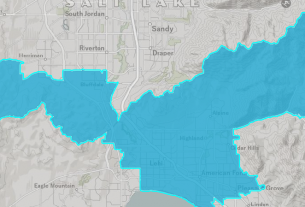
This Senate district covers some of the fastest-growing communities in Utah, from Eagle Mountain to Tooele, and both candidates describe a district being reshaped by new roads, data center construction, and a possible nuclear testing campus. The race also splits on a question that has dominated Utah politics: what to do about Proposition 4 and the redistricting fight that followed. Here is a look at Brooks Benson and Emily Buss, who each sat down to discuss their platforms and priorities for the district.
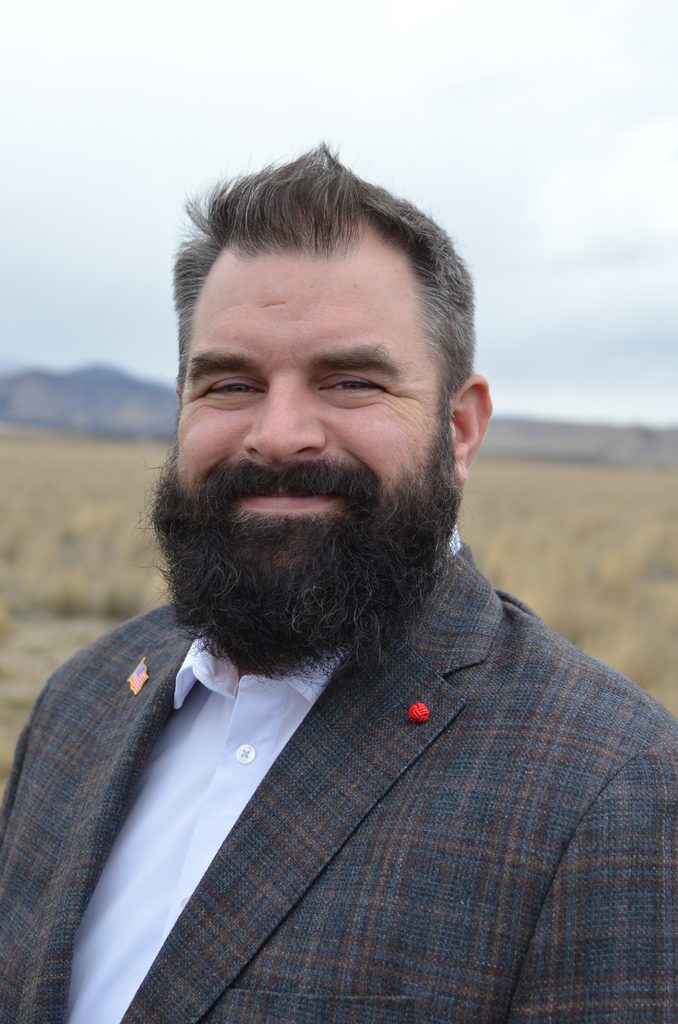
Brooks Benson: The AI Builder Betting on Nuclear
Background: Republican nominee, gym operator (Wolf’s Gyms), builder of AI infrastructure for several companies, caucus delegate since 2022 Website: brooksbenson4utah.com Contact: brooks@bensonforutah.com
Benson has been married for 14 years and has two kids, and he credits his wife for how well they are turning out. He is an outdoorsman who enjoys fishing, hunting, and falconry. Benson is opening Wolf’s Gyms locations in Saratoga Springs, a more premium concept with cold plunge and sauna recovery options that costs more and caps membership to avoid overcrowding.
He decided to run because the district is the fastest growing in the state. Benson got involved in state politics in 2022 as a caucus delegate and felt he could make a difference. He describes the district as an unusual one, taking two and a half to three hours to cross.
Growth and Transportation
Benson expects Tooele to grow much faster than it has, and he sees growth happening across the whole district. He points to the Mountain View Corridor, which is in its first phase, to State Route 36 in Tooele, which is the only route toward Salt Lake City, and to Eagle Mountain, whose population he describes as doubling in six years. Eagle Mountain’s population has roughly doubled since 2019, according to the city’s estimate of 76,695 residents as of Jan. 1, 2026. He says he wants to understand how transportation decisions are made.
Nuclear Power and Tooele
Nuclear is a big issue for Benson, and he wants it to be safe and responsible. He points to a proposed nuclear lifecycle campus past Tooele toward Skull Valley, with bids for the project in play. He compares the concept to the Idaho National Laboratory, with Tooele focused on testing reactors, and argues that testing there is how the state can mitigate risk.
His conditions are that nuclear stay out of the center of towns and that utility costs stay low. He believes a majority of people see nuclear as very clean, and he says it is not as expensive as it used to be. He notes that the University of Utah once had a reactor, and he argues that Utah has the mining and the open space to be a leader. Keeping the work in state also means uranium would not need to cross state borders, which he says makes the process simpler, and he points to the many regulations that govern safety and waste handling.
AI and Regulation
Benson is a big fan of AI, uses it daily, and has built AI infrastructure for several different companies. He calls regulation of the big AI companies a weird ask. Benson acknowledges a concern that AI could kill us and says it could be an imminent threat, but he cannot think of a regulation that would stop it. He sees the push for regulation as more of a request for protection from other AI creators so that the companies asking can monopolize the field. He believes the only real solution is AI that can defend against AI, and he does not see how regulation solves the problem.
Data Centers and Transparency
Benson notes that data centers in other states have driven electricity price hikes and caused major water problems. He argues Utah is in a different position because data centers here can generate their own power and the state has the natural resources to supply it. Benson says he understands the state’s position but opposes sweetheart deals, arguing that the companies need Utah and that there should not really be tax breaks. He favors air-cooled facilities and careful use of water. On water more broadly, he wants to look at tapping into aquifers in the West Desert and transporting the water underground.
He says transparency is essential because it is what people want and government should be working for them. He argues normal processes should be used and residents notified. Benson criticizes the Military Installation Development Authority (MIDA) as having been used to sidestep the process and, in certain cases, to force projects on communities. He would hold officials accountable through elections and notes that a lot of legislation on the topic is already out there. He would support banning nondisclosure agreements between data centers and local officials for the general project, though not for technical details, and says a short NDA could be acceptable so long as the public is informed in a timely manner.
Privacy and the Fourth Amendment
Benson wants to fortify the Fourth Amendment as technology circumvents it. He traces the history: the telephone was invented in the late 1800s, but legislation requiring law enforcement to get a warrant did not come until the late 1960s, with Watergate following soon after. In 1986, those protections were extended to email, text messages, and wireless phones. He argues the gap has opened again, saying Flock can now record a person making a phone call with its microphones and that no one needs to be near you to overhear you. Flock says its audio detection product listens for events such as gunshots, fireworks, and car crashes, keeps clips only when one is detected, and is not designed to capture conversations.
He says he is working across the aisle with other legislators on legislation and wants to be very conscious of privacy in the age of AI. Benson argues for a duty of loyalty, meaning data should be used only for the purpose it was collected for. He sees it as the legislature’s job to protect the people against the government. He says he is not concerned about license plate readers themselves, only about government use of them, and wants to make sure people’s rights are protected.
Prop 4 and Redistricting
Benson believes Proposition 4 was meant to create an advisory council, not to decide the map. He says that if people had understood it better, it would not have made the ballot, and he does not believe it should be in place. In his view, if it had been an advisory commission only, the legislature would have been fine making its own maps. He says it has caused a lot of confusion and suggests the state may need to restart the process. He thinks the state should have reverted to an older map, and he does not believe the lieutenant governor should have accepted the map, arguing the office could have sided with the legislature rather than the judiciary. Readers can learn more in UTElection.info’s look at the judge’s redistricting ruling.
People and Learning
Asked what inspires him, Benson says he loves people in general, finds them amazing, and loves to network and facilitate. He tries to approach situations as something to learn from others.
Books Brooks Benson said he has recently read or is currently reading:
- Mere Christianity by C.S. Lewis
- Signature in the Cell by Stephen C. Meyer
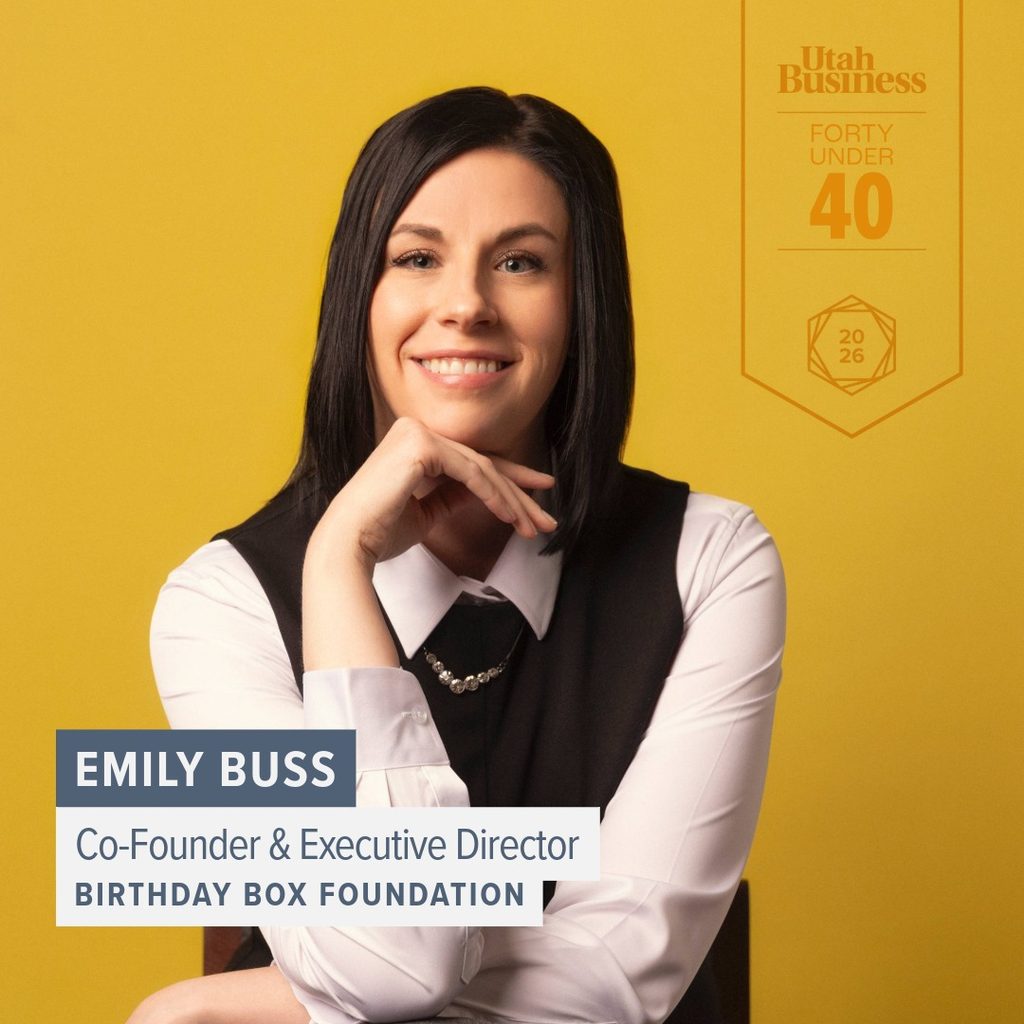
Emily Buss: The Outsider in the Senate
Background: Licensed Social Service Worker, Nonprofit Co-founder & Executive Director, sitting state senator Website: emilybussutah.com Contact: emily@emilybussutah.com
Sen. Emily Buss is a mother of three who has been married almost 16 years and has lived in Eagle Mountain for six and a half years. She was a stay-at-home mom for a long time and started a nonprofit to help kids celebrate their birthdays. As a Licensed Social Service Worker, she helps connect people with existing resources. She ran for city council before being elected within the Forward Party to fill the state Senate seat formerly held by Dan Thatcher, who had left the Republican Party for the Forward Party and later resigned. She says she was asked to take the seat rather than seeking it out, and that she does not need the spotlight or the credit.
An Independent Voice
Buss argues she has shown that you do not need to belong to either party to make an impact and that outsiders can work with both parties. She says she has felt like a political experiment and believes Utah needs more independent voices. Her specialty, she says, is working with legislators from both sides to solve problems for constituents.
She was sworn in only weeks before the session and had no expectations of getting bills passed. Some bills passed the Senate unanimously but were not heard in the House. She points to SB 153, where she convinced Sen. John Johnson to include victims of domestic violence in the protection of voter information, knowing the bill would pass either way.
Being a senator has given her the opportunity to open doors that would otherwise not talk to or listen to you if you are not an elected official. Now people come to her and are willing to take her call. She mentioned she recently met with the heads of UDOT to discuss traffic issues in Eagle Mountain and Tooele.
Growth and Transportation
Buss is passionate about growth issues and community resources. From her UDOT meeting, she says roads will be expanded but not past the ranches. She notes that 4,500 construction workers head to work on the data centers each day, creating a traffic jam twice a day where the road narrows to one lane each way. Asked what happens to road usage once the data centers are built, she says the Firefly development will need the additional capacity. She points to growth from 35,000 to 80,000 residents in a few years.
Buss calls the district very gerrymandered and says it is sometimes faster to get from Eagle Mountain to other parts of the district by going through Tooele. She notes that Tooele faces similar challenges and was among the final five places considered for the nuclear campus, which would feed further congestion.
Data Centers and Technology
Buss says data centers are coming whether people want them or not, so the state needs to set guidelines and guardrails for water and energy efficiency to better control them. She does not support any type of tax incentives for the companies.
On AI, she calls the tools definitely useful but says communication feels scripted now. She also does not like Flock cameras because she does not feel the data is secure.
Taxes and Party Labels
Buss led a referendum against a huge property tax increase. She says she was called a Democrat for opposing income tax changes that mostly helped the wealthy and shifted the burden to property taxes that fund education and social services.
Redistricting and Checks and Balances
Buss is endorsed by Better Boundaries. She argues legislators should not be able to pick their voters and that redistricting should be entirely data-driven. Buss says legislators should not be rewriting the laws to get the districts they want. She describes the legislature as retaliatory toward the judiciary in the last session and stresses the importance of checks and balances.
What Drives Her
Buss is inspired by seeing other people make change in their life or community, especially ordinary people trying to do good. She sees not belonging to a major party as a strength, arguing that people want good governance and principled, independent people who are not controlled by parties. She says she wants to solve real problems in Utah rather than grab headlines.
Books Emily Buss said she has recently read or is currently reading:
- Start with Why by Simon Sinek
She also said she reads bills, policies, and analyst reports.