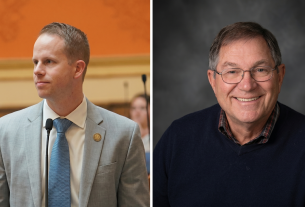
Utah County’s Seat B race has already drawn a crowded field. J Allen and David Hinckley each bring an outsider argument that party-line thinking is getting in the way of the county’s growth planning: Allen frames the problem in executive terms, arguing that 30 years of running businesses taught him how to plan past the next election cycle, while Hinckley frames it in structural terms, arguing that the two-party system itself produces the gridlock he wants the commission to avoid. David Spencer, a former Orem City Council member previously profiled in UTElection.info’s wider Seat B roundup, sat down for a follow-up conversation on how his views on infrastructure, agriculture and county efficiency have developed since. All three discussed growth, data centers, and what they see wrong with how the commission currently operates.
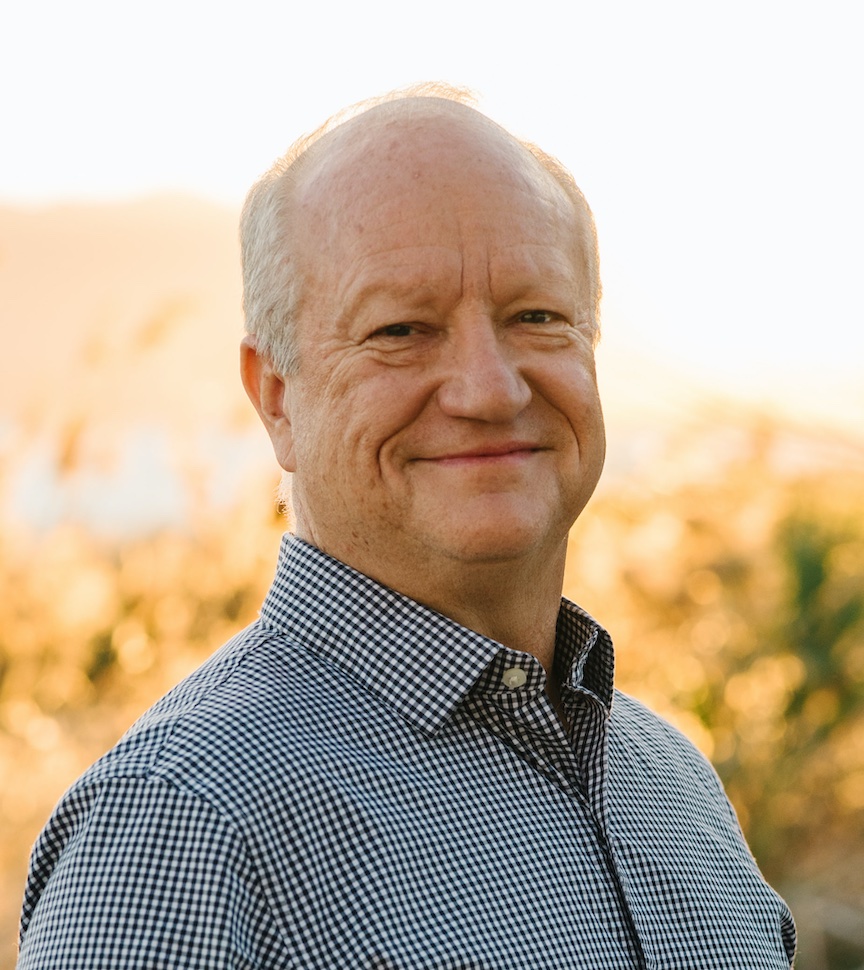
J Allen: The Executive Running Against Party Loyalty
Background: Democratic candidate for Utah County Commission Seat B; software executive and 30-year business leader; current CEO of a medical device company; has worked with state and local government and in education. Website: allenforutahcounty.com Contact: votejallen@gmail.com
Allen has lived in Utah County for 40 years and says the infrastructure problems the county faces now could have been avoided with better planning in the past. His pitch centers on his business background: he has spent 30 years in executive roles, including his current position as CEO of a medical device company, and says he once brought the first personal computer into the White House. He has also worked directly with state and local government and in education. He wants to plan not for the next election cycle but for the next 30 to 40 years, so that his children and grandchildren can still afford to live in the county.
Growth and Infrastructure Planning
Allen argues Utah has managed growth fairly well over the last several years and wants to continue that trajectory. He points to the Utah Department of Transportation as a model for how the county should operate, saying UDOT is effective at projecting population growth and land use, and that he would work closely with the agency as commissioner. He cites projections showing that by 2040, the combined population of Lehi, Eagle Mountain and Saratoga Springs alone will equal Utah State’s total population in 2002, a scale of growth he says demands long-range planning rather than reactive decision-making. Utility infrastructure, particularly water delivery to cities, is another priority he raises, noting that roughly 90% of development in the county happens within city boundaries rather than unincorporated land.
Party Politics in County Government
Allen’s central critique of the current commission is that decisions get made based on party loyalty and trendy social issues rather than policy substance. He argues commissioners sometimes block certain projects outright while clearing the way for others, a pattern he attributes to politics rather than planning. He credits current Commissioner Gardner with successfully lobbying for state and federal grant funding for northwest Utah County, calling it a matter of being in the right place at the right time. By contrast, he criticizes his opponent David Spencer for removing light rail and mass transit from the transportation plan for Orem. He also points to Spencer’s vote to end Black History Month and other ethnic recognition months at the local library, and to commissioner Bill Lee’s opposition to bus rapid transit, as examples of the kind of party-driven decision-making he wants to move away from. Asked what inspires him, Allen pointed to people who show courage and do the right thing regardless of political cost, citing Lieutenant Governor Deidre Henderson’s willingness to stand up to Trump and the GOP to protect voters as an example.
Data Centers and MIDA
Allen raised Box Elder County’s approval of a large data center as a cautionary example, questioning whether counties should sign non-disclosure agreements as part of such deals. He is also watching the Military Installation Development Authority closely, describing it as a potentially “skeleton key” that is likely too powerful, and says he hopes the state legislature takes a closer look at its authority. He noted that it is easy for developments to claim a government-use exemption to bypass normal local review, and said he would rather not find himself in conflict with MIDA as a commissioner.
Technology and Truth
Allen described AI in technical terms, as a set of gradient-descent algorithms that predict the next likely output rather than something that reasons on its own. He said the technology’s growing computational reach raises novel security risks, pointing to scenarios such as unauthorized access to cryptocurrency or interference with secure military communications as the kind of threat that warrants caution. He also raised a broader concern about over-reliance on AI, comparing widespread dependence on the technology to giving everyone a mobility scooter: convenient, but with the risk of atrophying capabilities people would otherwise maintain on their own.
Books Allen said he has recently read or is currently reading:
- The British Are Coming by Rick Atkinson
- In the Hands of Providence by Alice Rains Trulock
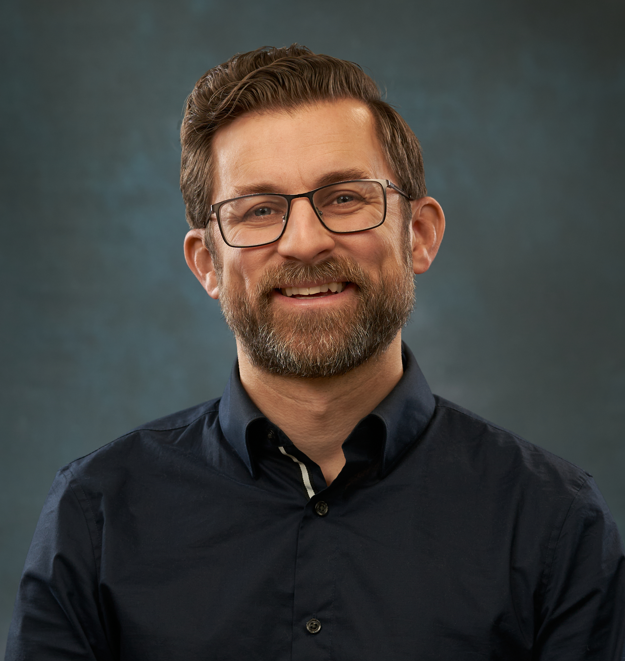
David Hinckley: The Forward Party’s Case for the Middle
Background: Longtime Republican Party county and state delegate; joined the Forward Party roughly 3-4 years ago. Website: davidhinckley.com Contact: david@davidhinckley.com
Hinckley has been involved in Utah politics for years, formerly serving as a GOP state and county delegate. He says he has grown increasingly concerned over that time about how extreme politics has become, arguing that solid policy has a hard time winning the day in a system that is either gridlocked or one-sided. About three to four years ago he got involved with the Forward Party, which he says offered a path toward practical solutions that benefit everybody rather than one faction. He believes non-partisan solutions belong at the city and county level in particular, and wants growth planned in a practical, non-partisan way that leaves government working for people rather than parties.
The Case for a Third Way
Hinckley distinguishes the Forward Party from other third parties by where it sits ideologically. Where most third parties tend to organize around the extreme edges of politics, he argues the Forward Party operates from the middle. He describes the current two-party system as a zero-sum game in which both sides are incentivized to rile up their base, producing what he calls unhealthy divisiveness. In a genuinely competitive race, he says, that dynamic still sends candidates to the extreme to win a primary before they pivot back to the middle to win the general election. But he argues most Utah general elections aren’t competitive enough to force that pivot, so the dominant party has little reason to moderate, which is what leaves the actual political middle underrepresented. He says the Forward Party organizes around a platform of principles that he considers strong on its own terms. Hinckley doesn’t credit that approach itself with making room for multiple parties to coexist; he argues that only structural voting reforms, such as ranked-choice voting, STAR voting or proportional representation, would durably open the system to more than two competitive parties. He acknowledged the Forward Party could end up displacing Democrats in some races in the short term, but said that isn’t the goal. The goal, he said, is passing those voting reforms so Republicans, Democrats, Forward Party candidates and others can all compete without any one of them acting as a spoiler, and without any party operating the way he says the legacy parties do now.
Growth, Housing and Zoning
Hinckley calls growth “a blessing and a curse.” He notes a structural mismatch in timelines: major roads are planned on 30-year horizons, while housing can be built in just a few years, so the two often fall out of alignment. Working through that gap toward a realistic middle ground, he says, has to be done thoughtfully and carefully. He singled out the area west of Utah Lake as an example of growth that has gone poorly. In his view, inadequate housing construction east of I-15 over recent decades is what has pushed growth west of the lake, and cities east of the lake doing their part on housing would relieve some of that pressure. He wants to see more ownership-density housing and simply more housing supply overall, arguing the county’s growth isn’t going to stop. He describes the process as a three-way partnership: the county can only do so much on its own, cities need to zone properly, and the state needs to provide funding.
Vote-by-Mail and Commission Priorities
Hinckley argues Utah County carries significant weight in state politics and should use it to protect, not restrict, ballot access. He pointed to a past effort by Utah County Clerk Davidson, an outspoken opponent of vote-by-mail who was defeated in the primary, to eliminate the practice, an effort he said no sitting county commissioner supported. Hinckley said he would lobby against any effort to make voting more difficult. He also noted that county commissioners work full-time, giving them the bandwidth to engage seriously with issues like this rather than treating them as an afterthought.
Data Centers and AI
Hinckley expects data centers to remain a growing issue nationally, with AI turbocharging the trend. He believes individual communities should get to decide whether they want data centers sited locally, and pointed to Box Elder County’s data center as an example of a deal that needs to change: developments like it need to demonstrate their impact and their benefit to the surrounding community. He opposes using non-disclosure agreements in these negotiations, preferring an open marketplace instead. More broadly, he sees AI as transforming industry and wants to use it to improve efficiency where it can, while protecting jobs and helping workers retool through major economic shifts.
Asked about inspiration, Hinckley mentioned recently seeing the musical Hadestown, saying he was struck by its tension between idealism and hard realism, and by its portrayal of people working for change and trying to build a better world.
Books Hinckley said he has recently read or is currently reading:
- Evicted: Poverty and Profit in the American City by Matthew Desmond
- Poverty, by America by Matthew Desmond
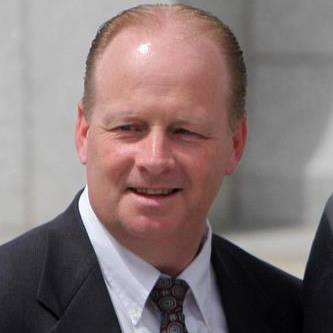
David Spencer: Infrastructure Before Growth
Background: Former Orem City Council member; private-sector import/export background. Website: davidspencerforutah.com
UTElection.info first profiled Spencer in Utah County Commission Seat B: The Crowded Race for the Open Seat, where he focused on rolling back the commission’s recent pay and staffing increases. In a follow-up conversation, Spencer said the campaign has sharpened his view of the job itself: coming from city government, he has found the county to be a different animal, and he has made a point of meeting individually with officials from each city in the county rather than treating their needs as uniform. What he hears varies widely from city to city, he said.
Growth and Infrastructure
Spencer argues the county needs to address gaps in transportation and infrastructure before continuing to approve new development, rather than what he characterized as reflexive “build, build, build.” He points to Eagle Mountain and Saratoga Springs, where he said roughly 60,000 permitted homes have not yet been built, as evidence that the county’s housing pipeline is already well ahead of the infrastructure meant to support it. He also said he intends to reach out to more state legislators than commissioners typically do, to build support for the county’s infrastructure needs at the state level.
Agriculture and Land Use
Spencer raised the gravel pits in Genola as a specific concern, saying the dust they generate is harming surrounding agriculture, including orchards, even though the operations are following the rules that currently apply to them. He said the county needs to find a way to make gravel operations and agricultural land coexist, and that it has to be especially careful when a pit sits next to a neighborhood or cropland, since the wrong approach could end up pushing the surrounding area toward higher-density development instead. He framed the broader goal as staying connected to and representative of everybody affected, not just the loudest voices.
Tourism Tax Distribution
Spencer questioned whether the county’s tourism tax revenue is effectively picking winners and losers among cities, asking whether Provo is capturing most of the funding while cities like Lindon see little of it.
Efficiency and Transparency
Spencer said he wants county government to run efficiently and to make sure rising costs and growth don’t end up pushing people out of their homes. On data centers specifically, he said transparency is key. He described himself as willing to answer his phone or meet with anybody, and said he isn’t taking his chances in the race for granted.
Books Spencer said he has recently read or is currently reading:
- On Power by Mark R. Levin
Asked what inspires him, Spencer said that if he can help somebody, he has accomplished something, and pointed to doing the little things as what matters most to him.